Your asphalt driveway really takes a beating, especially here in Taunton with our crazy freeze-thaw cycles. One minute it's 50 degrees, the next it's below freezing. That's a perfect recipe for cracks and potholes, isn't it? So, what do you do when your driveway starts looking like Swiss cheese?
Spotting the Damage: What You're Up Against
First off, you need to understand what kind of problem you're facing. Not all asphalt damage is the same. You might see:
- Hairline cracks: These are thin, usually less than a quarter-inch wide. They often pop up as the first sign of trouble.
- Alligator cracking: This pattern looks exactly like alligator skin. It's a bunch of interconnected cracks, and it usually means the base underneath is starting to fail.
- Potholes: These are the big ones, actual holes in the asphalt. Water typically gets under the surface, freezes, expands, and then thaws, leaving a void. That's how they form.
- Raveling: Here, the aggregate (those small stones) starts coming loose from the binder, making the surface rough and crumbly.
If you're seeing widespread alligator cracking or really deep, wide potholes, you're probably looking at a job for the pros. But for smaller cracks and minor potholes, you can often tackle it yourself.
Before You Start: Getting Ready for DIY Repair
Don't just jump in with a bucket of cold patch, okay? You need to prepare the area properly, or your repair won't last. Trust me, I've seen plenty of folks try to cut corners, and it always ends up costing more in the long run.
- Clean it up: This step is huge. Sweep out all loose debris, dirt, and gravel from the crack or pothole. A stiff brush or even a leaf blower works great for this. If there's grass or weeds growing through, pull 'em out.
- Edge it out: For potholes, you want nice, clean, vertical edges. Use a chisel or a pickaxe to square off the edges. This gives the new patch something solid to bond to. If the edges are crumbling, cut them back until you hit solid asphalt.
- Dry it out: Water is the enemy here. The area needs to be completely dry before you apply any patching material. If it's been raining, give it a day or two of sun, or use a heat gun (carefully!) to speed things up.
- Prime it (sometimes): For deeper potholes, especially if the base is exposed, a tack coat or asphalt primer can really help the new patch stick. Read the instructions on your patching material – some require it, some don't.
During the Repair: Patching It Up
Okay, you've got your area prepped. Now for the actual patching. You'll likely use cold patch asphalt, which you can find at any hardware store. It's designed for exactly this kind of homeowner repair.
- Fill 'er up: Shovel the cold patch into the hole or crack. Don't just dump it all in at once, though. Fill it in layers, about 2-3 inches at a time.
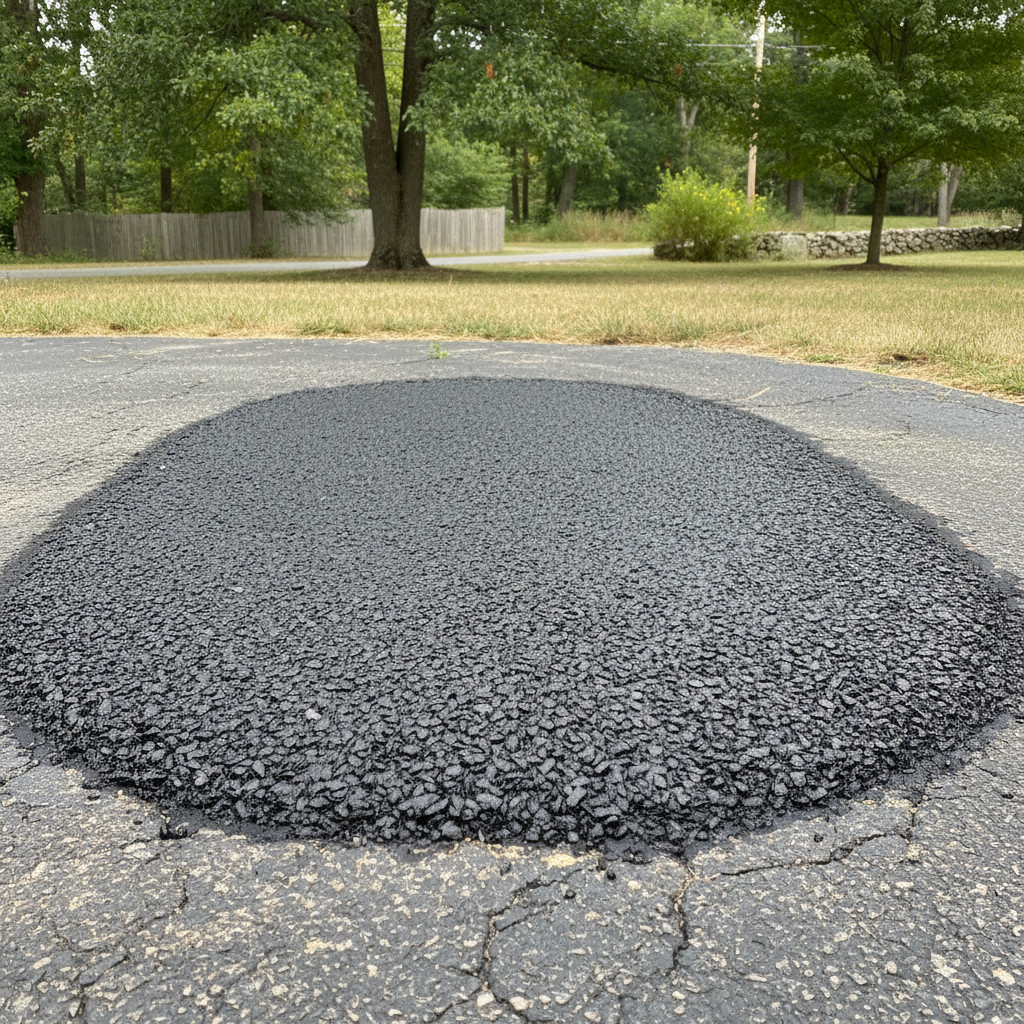
- Compact it down: This is the most critical step. You absolutely need to compact each layer thoroughly. A hand tamper is ideal for smaller areas. For bigger patches, you can drive your car over it a few times. The goal is to get it as dense as possible, so it doesn't settle later. You want the patch to be slightly mounded above the surrounding asphalt, because it will settle a bit over time.
- Smooth it out: Once compacted, use a rake or shovel to smooth the surface so it blends in with the existing driveway.
For cracks, you can use a pourable crack filler. Just make sure the crack is clean and dry, then pour it in. Some come with a nozzle for easy application. Don't overfill; you want it flush with the surface.
After the Repair: What to Expect & When to Call Us
You've done the work, now what? Give the patch some time to cure. The exact time depends on the product and the weather, but generally, it's a few hours before you should drive on it. Keep an eye on it over the next few weeks and months. If it starts to sink or crumble, you might need to add more material or re-compact it.
So, when do you throw in the towel and call in the pros like Fortune Asphalt Taunton?
- Widespread Damage: If your driveway looks like a patchwork quilt of repairs, or if you've got extensive alligator cracking across a large area, it's time for a professional assessment. Your base might be failing, and no amount of patching will fix that long-term.
- Deep or Large Potholes: While you can patch smaller ones, really deep or wide potholes might point to a bigger structural issue that needs professional attention.
- Drainage Issues: If you've got standing water on your driveway after every rain, that's a problem. Poor drainage is a major cause of asphalt failure, and a pro can usually fix the grading. We see this a lot in some of the older neighborhoods around East Taunton, where the original grading wasn't always perfect.
- You Just Don't Want To: Hey, I get it. Not everyone enjoys spending their weekend wrestling with cold patch. If you'd rather spend your time doing something else, give us a call.
Doing a little DIY repair can definitely extend the life of your driveway and save you some cash. But know your limits. Sometimes, a professional repair or even a full resurface is the smarter, more cost-effective choice in the long run. Don't hesitate to reach out if you're unsure – we're always happy to take a look and give you an honest opinion.