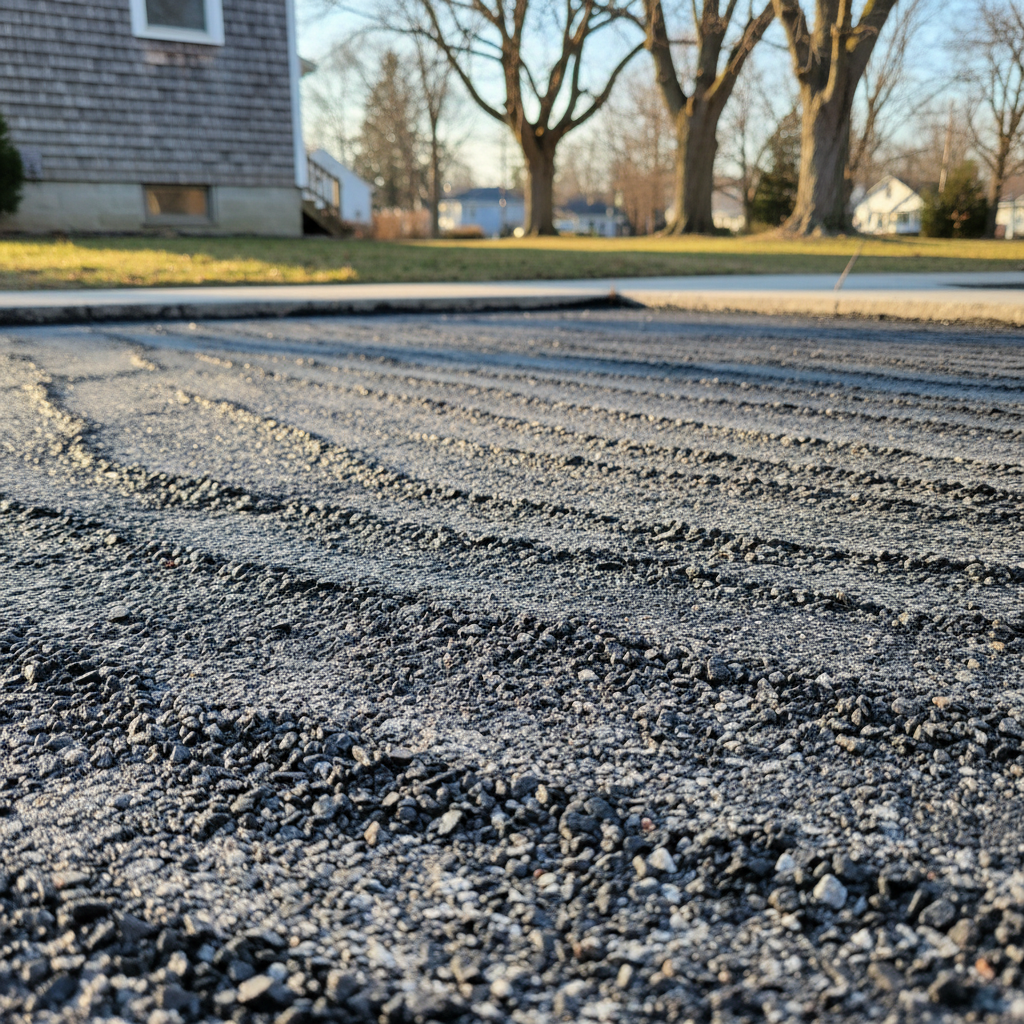
Alright, let's talk asphalt milling. You might have heard the term, or maybe you've just seen a crew tearing up a road and wondered what the heck they were doing. For homeowners here in Taunton, especially if you've got an older driveway that's seen better days but isn't completely falling apart, milling can be a smart move. It's not always about ripping everything out and starting fresh, you know?
What Even Is Asphalt Milling?
Simply put, asphalt milling is when we use specialized equipment to remove the top layer of an existing asphalt surface. Think of it like a giant planer for your driveway. We grind down that old, cracked, or uneven surface, leaving behind a fresh, textured base. This base is then ready for a new layer of asphalt. It's a fantastic way to repair and refresh a driveway without the full expense and disruption of a complete tear-out and replacement.
Why bother with milling? Well, for one, it's often more affordable than a full replacement. You're reusing a good portion of the existing material, which is good for your wallet and good for the environment. Plus, it helps maintain your driveway's grade and drainage. You don't want to keep adding layers of asphalt year after year and end up with your driveway higher than your garage floor or your lawn.
Before the Milling Crew Shows Up
Okay, so you're considering milling. What should you be thinking about beforehand?
- Assess Your Driveway: Is it just surface cracks and unevenness, or do you have major potholes and a crumbling base? Milling is great for surface issues. If your base is shot, you might need more extensive work. I've seen driveways in places like the Neck-O-Land area that have been patched so many times they look like a quilt; milling can really smooth those out.
- Drainage: Where does your water go now? Milling will maintain the existing slope, so if you've got drainage issues, milling alone won't fix them. We'd need to talk about grading adjustments before we even start.
- Permits: For residential driveways, you usually don't need a permit for milling and repaving, but it's always a good idea to double-check with the City of Taunton's building department, just to be safe.
- Clear the Area: This is where you come in. Before any crew arrives, you'll want to move anything that's near the driveway. Cars, trash cans, garden hoses, kids' toys – anything that could get in the way or get damaged. We're talking heavy machinery here, so give us some room to work.
- Mark Sprinklers/Invisible Fences: If you've got an irrigation system or an invisible pet fence running under or near the driveway, you absolutely need to mark those lines clearly. We can't see them, and we don't want to accidentally cut them.
During the Project: What to Expect
When the crew from Fortune Asphalt Taunton shows up, things are going to get noisy and dusty. That's just the nature of the beast. We'll bring in the milling machine, which is a big piece of equipment with a rotating drum that grinds off the top layer of asphalt. We'll also have dump trucks to haul away the milled material (which often gets recycled, by the way – pretty cool, right?).
The actual milling process is usually pretty quick for a residential driveway. Once the old surface is removed, we'll clean up the area thoroughly, making sure it's free of loose debris. Then, we'll apply a tack coat – a sticky liquid asphalt that helps the new layer adhere properly. Finally, we'll lay down the new hot asphalt, compact it, and give you a smooth, fresh surface.
Your role during this? Mostly staying out of the way and letting us do our job. Keep pets and kids clear of the work zone. If you have any questions or concerns, just ask the foreman on site.
After the Milling and Paving
Once the new asphalt is down, it's not quite ready for prime time immediately. Here's what you need to know:
- Curing Time: You'll need to stay off the new driveway for at least 24-48 hours, sometimes longer if it's really hot out. The asphalt needs time to cool and harden properly. Driving on it too soon can leave tire marks or even indentations.
- Initial Softness: For the first few weeks, especially in our hot Taunton summers, your new asphalt will still be somewhat soft. Avoid parking heavy vehicles in the same spot for extended periods, and be careful turning your steering wheel sharply while stationary – that's a common way to scuff up new asphalt.
- Watering: Some folks like to lightly spray their new driveway with water during the hottest parts of the day for the first week or two. This helps it cure more evenly.
- Sealcoating: After about 6-12 months, once the asphalt has fully cured, you'll want to consider sealcoating. This protects your investment from UV rays, water, and chemicals, extending its lifespan significantly. It's like sunscreen for your driveway.
DIY vs. Calling a Pro
Let's be real: milling is not a DIY project. You're not going to rent a milling machine at Home Depot. This is specialized equipment that requires trained operators. Trying to do this yourself would be like trying to perform your own dental surgery – just don't. You need a professional for the milling and the paving.
What you can do yourself, as I mentioned, is the prep work – clearing the area, marking lines, and making sure we have clear access. After the job, you can handle the initial care, like staying off it and being mindful of how you use it. But for the heavy lifting, you definitely want to call in a reputable company like Fortune Asphalt Taunton. We've got the gear, the experience, and the know-how to get it done right, saving you headaches and money in the long run.
Milling is a great option for many homeowners looking to revitalize their driveways without the full cost of a complete overhaul. If you think it might be right for your property, give us a call. We're happy to come out, take a look, and give you an honest assessment.